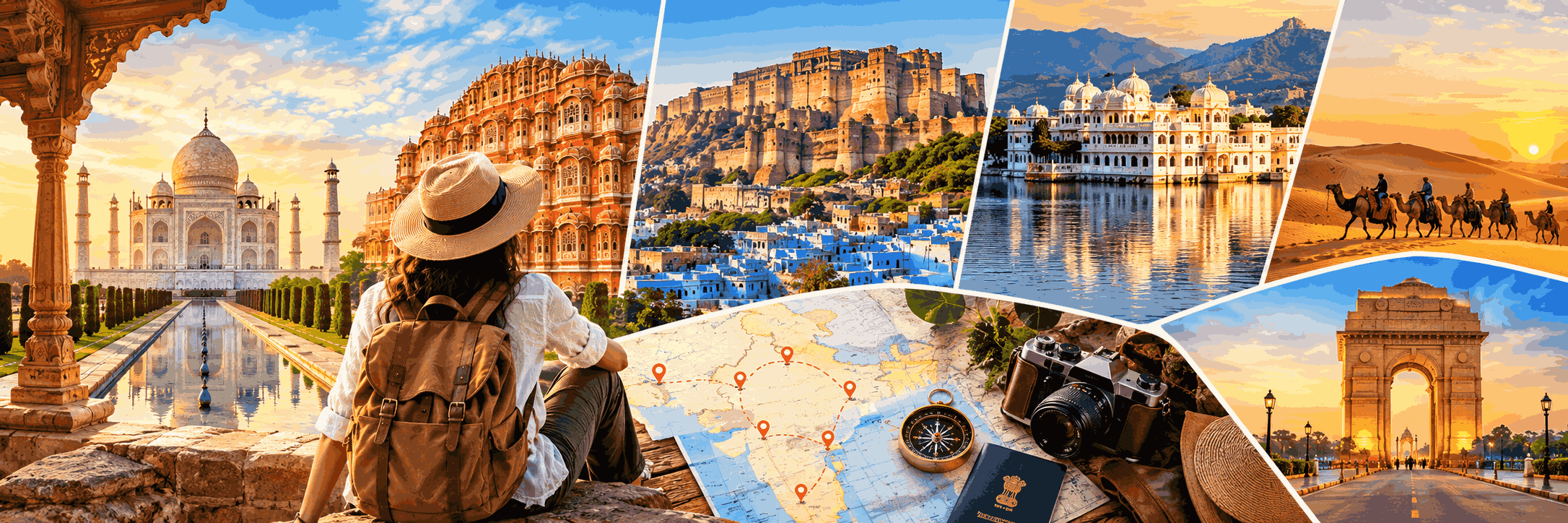
India has fascinated travelers for centuries — its layered history, timeless monuments, and vibrant culture create an experience unlike anywhere else on Earth. And if there is one circuit that captures the very essence of this incredible country, it is the legendary Golden Triangle Tour India.
Connecting three of India's most iconic cities — Delhi, Agra, and Jaipur — this triangle-shaped route is India's most traveled heritage circuit, and for good reason. In just seven days, you can walk through Mughal palaces, stand before the world's most celebrated monument of love, explore ancient forts, and lose yourself in the royal bazaars of Rajasthan.
This guide is your complete companion for planning the perfect Golden Triangle Tour from India — crafted with insider knowledge, practical tips, and the kind of cultural depth that turns a holiday into a memory that lasts a lifetime.
What Is the Golden Triangle Tour India?
The 'Golden Triangle' refers to the three-city circuit formed by Delhi (capital), Agra (home of the Taj Mahal), and Jaipur (the Pink City of Rajasthan). These three cities sit roughly 200–250 kilometers apart from each other, forming a triangle on the map — hence the name.
This route has been a favorite among international and domestic travelers for decades because it packs an extraordinary concentration of UNESCO World Heritage Sites, Mughal architecture, Rajput palaces, and living cultural traditions into a compact, well-connected route. Whether you are a first-time visitor to India or a returning traveler, the Golden Triangle never fails to enchant.
Why Choose the Golden Triangle for Your India Heritage Tour?
India has over 3,600 years of recorded history and 42 UNESCO World Heritage Sites — the richest heritage landscape of any single country on Earth. Choosing where to begin can be overwhelming. The Golden Triangle solves that problem beautifully by offering:
Three UNESCO World Heritage Sites — Taj Mahal, Agra Fort, Qutub Minar, Humayun's Tomb, and Jantar Mantar
A balanced mix of Mughal, Rajput, and colonial history
Excellent road and rail connectivity between all three cities
World-class heritage hotels, havelis, and luxury stays
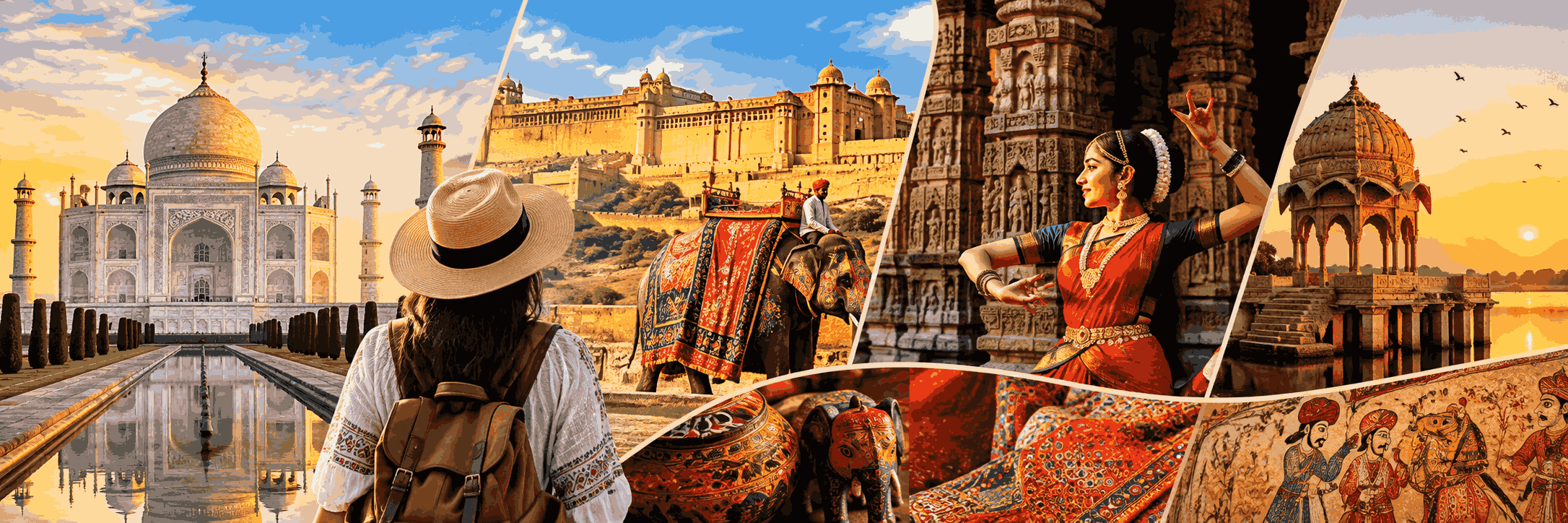
Vibrant bazaars, handicrafts, cuisine, and cultural performances
Suitable for all travel styles — from budget backpacking to luxury royal experiences
At India Heritage Journey, we design Golden Triangle tour packages that go far beyond the obvious sights, revealing the lesser-known stories and hidden corners that make each city truly extraordinary.
The Perfect 7-Day Golden Triangle Itinerary
Day 1 & 2: Delhi — Where Empires Meet Modernity
Your journey begins in Delhi, India's capital and a living museum of more than 2,000 years of history. Few cities in the world carry this many layers of civilization within their boundaries.
Must-Visit: Old Delhi: Wander through the labyrinthine lanes of Chandni Chowk, one of Asia's oldest and busiest markets. Visit the magnificent Jama Masjid, India's largest mosque, and cycle through the spice markets of Khari Baoli for an assault on the senses that you will never forget.
Must-Visit: New Delhi Monuments: Explore Humayun's Tomb, the architectural precursor to the Taj Mahal and a UNESCO World Heritage Site. Marvel at the ancient Qutub Minar, standing 73 meters tall and built in the 12th century. Walk through India Gate and the ceremonial Rajpath avenue.
Hidden Gem: Mehrauli Archaeological Park: Most tourists miss this stunning 10-hectare park surrounding the Qutub complex, filled with tombs, mosques, and ruins from the Delhi Sultanate era. A perfect spot for those who want to explore beyond the crowds.
Local Tip: Book your stay in a heritage boutique hotel in Lutyens' Delhi for an authentic colonial-era experience.
Day 3: Agra — The City of the Taj Mahal
Drive or take the express train to Agra (approximately 3–4 hours from Delhi). Agra was once the imperial capital of the Mughal Empire and home to Emperor Shah Jahan, who built the most recognized monument in human history here.
Taj Mahal — Before Sunrise: Arrive at the Taj Mahal before dawn to witness the pale pink light wash over its white marble domes. The Taj Mahal was built between 1632 and 1653 as a mausoleum for Shah Jahan's beloved wife Mumtaz Mahal. Standing before it at sunrise is a moment that few experiences in travel can match.
Agra Fort: This powerful sandstone fortress was the main residence of the Mughal emperors until 1638. Walk through its audience halls, private chambers, and royal mosques — and stand at the spot from where Shah Jahan, in his final years, could only gaze at the Taj Mahal in the distance.
Mehtab Bagh: Cross the Yamuna River to this garden complex, which offers a sweeping panoramic view of the Taj Mahal from the opposite bank — one of the most dramatic viewpoints in all of India.
Day 4: Fatehpur Sikri — The Abandoned Imperial City
En route from Agra to Jaipur, stop at Fatehpur Sikri — Emperor Akbar's short-lived capital, built in 1571 and abandoned barely 15 years later. This UNESCO World Heritage City is remarkably well-preserved and strangely haunting in its completeness.
Walk through the Diwan-i-Am (Hall of Public Audience), the Panch Mahal (a five-storied pavilion), the serene Jodha Bai's Palace, and the magnificent Buland Darwaza — one of the tallest gateway arches in the world at 54 meters.
Day 5 & 6: Jaipur — The Pink City of Rajputana Glory
Jaipur, the capital of Rajasthan and the crown jewel of this Golden Triangle route, is a city that wears its royal heritage on its walls — literally. In 1876, the entire old city was painted terracotta pink to welcome the visiting Prince of Wales, and the color has remained ever since.
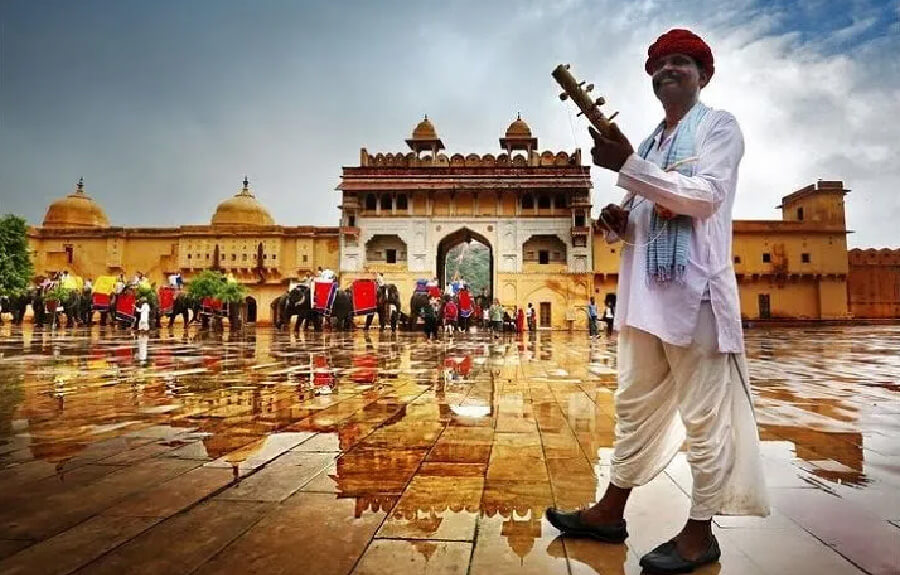
Amber Fort: Built in 1592 by Raja Man Singh, this fort-palace complex atop the Aravalli hills is a masterpiece of Rajput-Mughal architecture. Explore the Sheesh Mahal (Hall of Mirrors), where a single candle flame creates an illusion of a star-filled sky.
City Palace & Jantar Mantar: At the heart of the walled city lies the City Palace, still partially occupied by the royal family of Jaipur. Adjacent to it is the Jantar Mantar, an 18th-century astronomical observatory with instruments so precise they could track celestial movements to within a few seconds — a UNESCO World Heritage Site.
Hawa Mahal: The iconic five-story 'Palace of Winds' with its 953 latticed windows was designed so the royal ladies of the zenana could observe street life and festivals without being seen — a fascinating window into medieval Rajput court life.
Local Markets & Crafts: Jaipur is one of India's finest craft cities. Shop for blue pottery, block-printed fabrics, precious gemstones, and silver jewelry at Johari Bazaar and Bapu Bazaar.
Day 7: Return to Delhi & Departure
Your seventh day is a leisurely return to Delhi (5 hours by road or train), with time for any last-minute shopping, a final Delhi experience, or simply reflecting on an extraordinary week through India's golden heritage.
Best Time for the Golden Triangle Tour India
October to March: The ideal season — cool, pleasant weather, perfect for sightseeing. This is peak tourist season.
April to June: Hot and dry, temperatures can touch 45°C in Delhi and Agra. Not recommended for comfort travel.
July to September: Monsoon season brings lush greenery but high humidity. Some days may see heavy rain.
For the best experience, plan your Golden Triangle heritage tour between November and February when the weather is at its most comfortable and the monuments are at their most atmospheric.
Practical Travel Tips for Your Golden Triangle Journey
Train vs. Road: The Gatimaan Express (Delhi-Agra) is India's fastest train at 160 km/h. For Agra-Jaipur, a private car via Fatehpur Sikri is the recommended route.
Heritage Stays: Ask your tour operator for stays in heritage havelis and palace hotels — they add immeasurably to the experience.
Guided Tours: A knowledgeable local guide transforms a visit to the monuments from sightseeing to storytelling. India Heritage Journey provides expert certified guides at every destination.
Avoid Weekends at Taj Mahal: The Taj Mahal is closed on Fridays. Visit on weekday mornings for fewer crowds.
Photography Tip: The Taj Mahal looks most stunning at sunrise and at dusk when the marble catches the warm golden light.
Why Book Your Golden Triangle Tour with India Heritage Journey?
At India Heritage Journey, we believe that travel is at its best when it connects you with the soul of a place — not just its surface. Our Golden Triangle tour packages are designed to offer:
Customized itineraries tailored to your interests, pace, and budget
Expert heritage guides who bring history to life with stories, context, and passion
Carefully selected heritage hotels that complement the experience
Seamless transport with professional, English-speaking drivers
24/7 on-ground support throughout your journey
Whether you are looking for a luxury heritage experience, a budget-friendly cultural tour, or a private customized journey, we design the Golden Triangle tour that perfectly fits your travel vision.
Explore More with India Heritage Journey
The Golden Triangle is just the beginning. Once you have experienced Delhi, Agra, and Jaipur, a whole world of India's incredible heritage awaits. Here are some pages from our website to help you plan further:
→ Explore All India Heritage Tour Packages
→ Rajasthan Cultural Tour — Beyond Jaipur
→ How to Plan the Perfect India Heritage Tour
→ Contact Us to Book Your Golden Triangle Tour
→ Why Choose India Heritage Journey
Ready to Begin Your Golden Triangle Journey?
Contact India Heritage Journey today and let us craft your perfect India heritage experience.