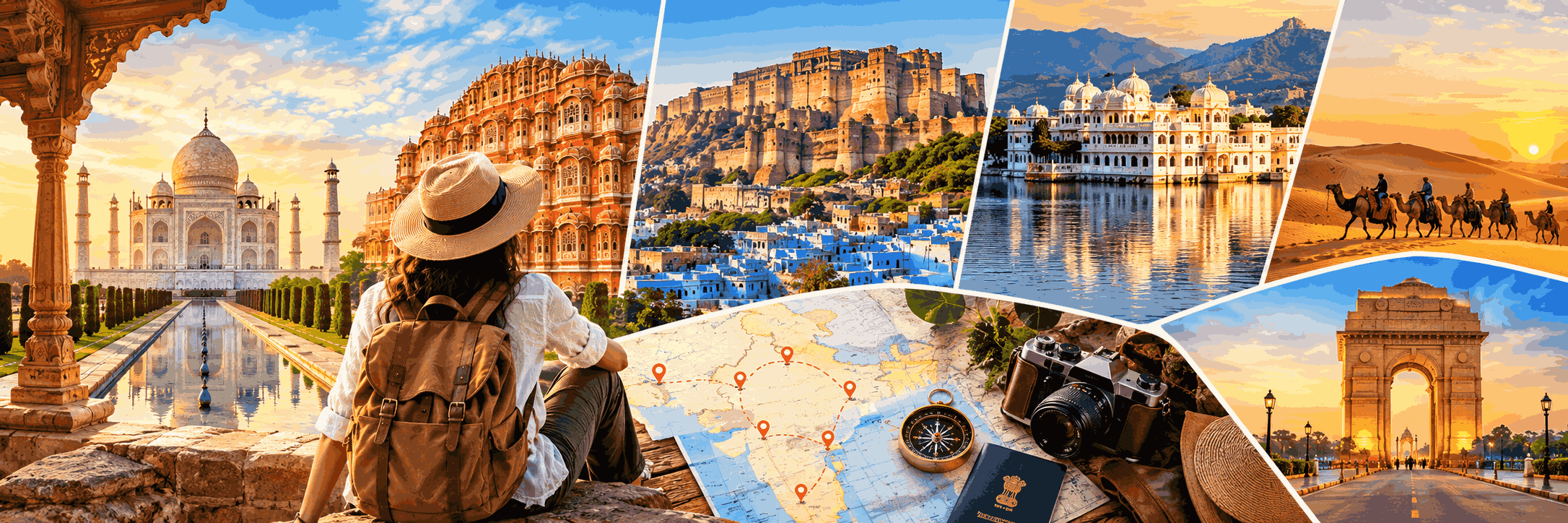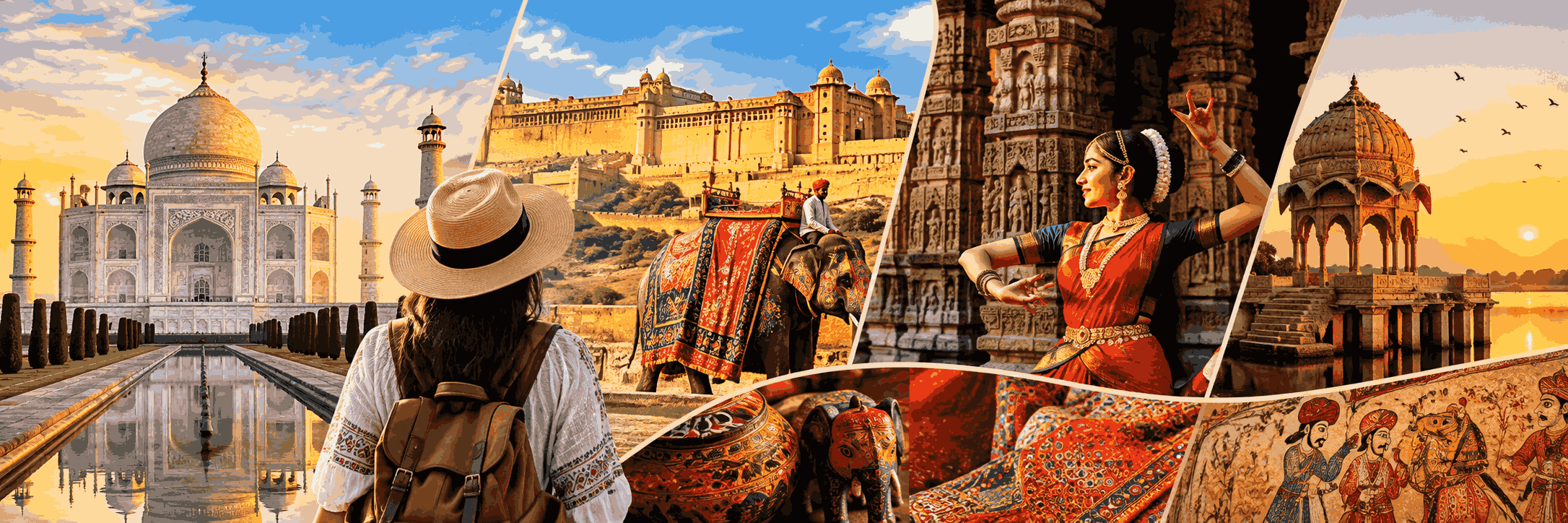
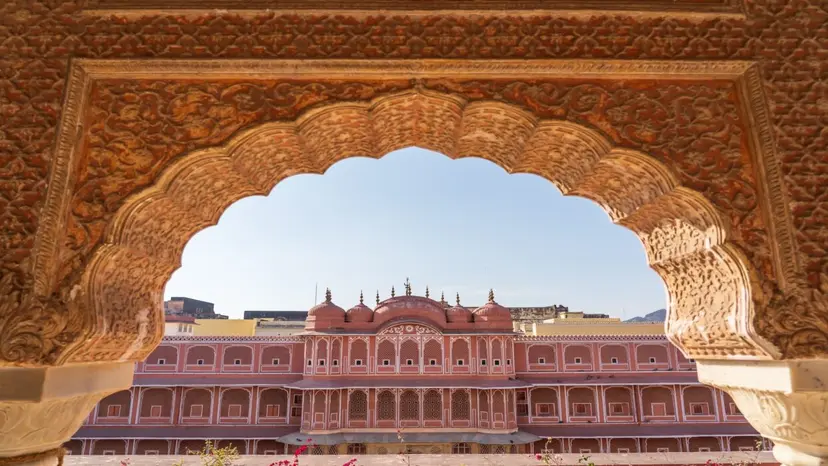
There are places in the world where history does not sit quietly in museums — it spills out onto the streets, rises from the desert in sandstone towers, echoes in the folk songs of wandering musicians, and burns bright in the colors worn by the women of Rajasthan. A Rajasthan cultural tour is not a journey to the past; it is an encounter with a living civilization that has maintained its extraordinary character for over a thousand years.
Rajasthan — the 'Land of Kings' — is India's largest state by area and arguably its most dramatic. Every city is a story. Every fort carries the weight of kingdoms won and lost. Every bazaar sells traditions handed down through generations of master craftsmen. From the pink sandstone of Jaipur to the golden dunes of Jaisalmer, from the romantic lake city of Udaipur to the blue-walled lanes of Jodhpur — Rajasthan rewards the curious traveler at every turn.
This guide from India Heritage Journey covers the 10 essential cities of your Rajasthan cultural tour, with deep dives into the history, culture, architecture, and authentic experiences that make each destination extraordinary.
Why Rajasthan Is India's Greatest Cultural Destination
Rajasthan was shaped by the Rajput clans — warrior nobles who built some of the most spectacular forts and palaces the medieval world had ever seen, and whose code of honor (the 36 Rajput clans followed a strict warrior's code) created a culture of extraordinary bravery, artistry, and romance.
The result is a state that gives you more per square kilometer of cultural density than almost anywhere else on Earth:
6 UNESCO World Heritage Sites (Jantar Mantar in Jaipur and the Hill Forts of Rajasthan — Amber, Chittorgarh, Kumbhalgarh, Ranthambore, Gagron, and Jaisalmer)
More than 500 forts and palaces, many of which have been converted into heritage hotels
India's finest tradition of textile handicrafts — block printing, bandhani tie-dye, zari embroidery, and mirror work
The Thar Desert — the world's 9th largest subtropical desert, creating a landscape unlike anywhere in India
Vibrant festivals including the Pushkar Camel Fair, the Desert Festival in Jaisalmer, and Teej in Jaipur
The 10 Essential Cities of Your Rajasthan Cultural Tour
1. Jaipur — The Pink City
Jaipur is where most Rajasthan cultural tours begin — and it earns this honor completely. Founded in 1727 by Maharaja Sawai Jai Singh II as one of India's first planned cities, Jaipur is a place where royal grandeur and everyday life coexist in spectacular fashion.
Amber Fort: The crown jewel of Jaipur's heritage, Amber Fort sits on a rocky ridge overlooking Maota Lake. Its extraordinary Sheesh Mahal (Hall of Mirrors) is lined with thousands of tiny mirror fragments that create a mesmerizing starscape effect from a single candle flame. The fort represents the Rajput-Mughal synthesis at its finest.
City Palace & Jantar Mantar: In the heart of the old walled city, the City Palace complex houses a museum of royal arms, textiles, and art. Adjacent Jantar Mantar — UNESCO World Heritage Site — is Jai Singh's remarkable 18th-century astronomical observatory, featuring the world's largest stone sundial.
Hawa Mahal & Old City Bazaars: The iconic 'Palace of Winds' with 953 latticed windows is followed by some of India's most vibrant shopping streets — Johari Bazaar for gems, Bapu Bazaar for textiles, and Tripolia Bazaar for bangles and lacquerware.
Cultural Immersion: Jaipur is one of India's great craft cities. Arrange a workshop visit to see block printing, blue pottery, or gem-cutting by master craftsmen.
2. Jodhpur — The Blue City
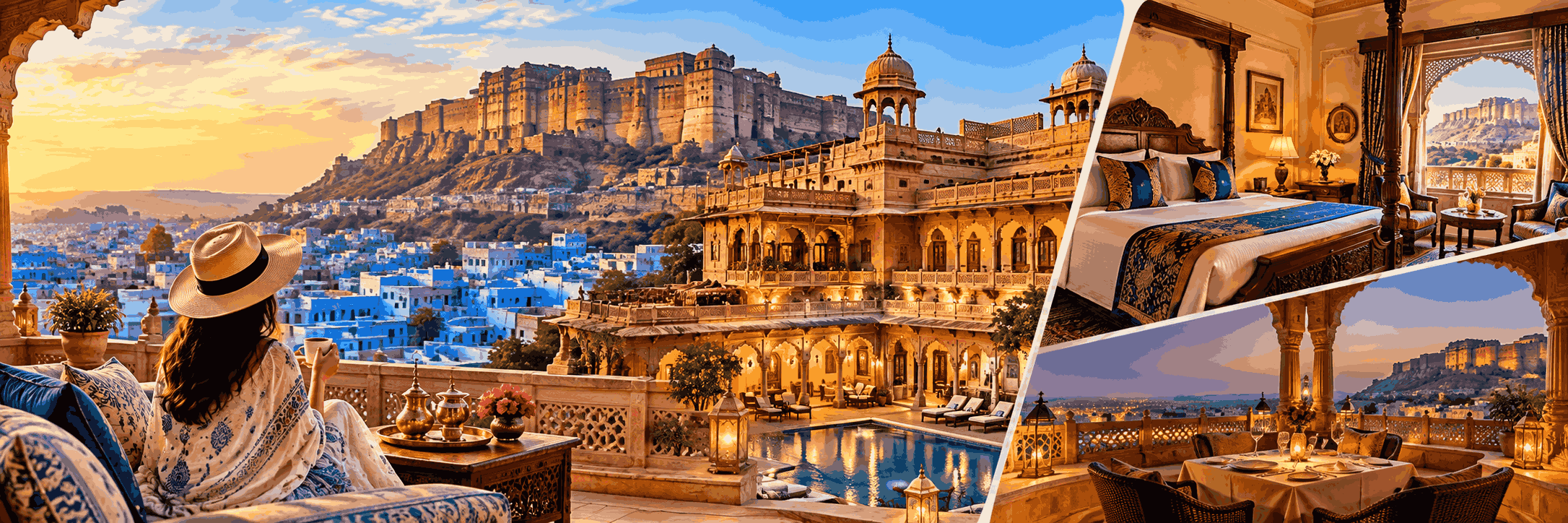
Jodhpur — the 'Sun City' and 'Blue City' — is one of Rajasthan's most visually stunning destinations. The old city's houses are painted a distinctive shade of indigo blue (traditionally used by Brahmin families to mark their homes, later adopted city-wide because of its natural pest-repelling properties). Rising dramatically above the blue rooftops is Mehrangarh Fort, one of the largest and most impressive forts in India.
Mehrangarh Fort: Built in 1459 by Rao Jodha, the founder of Jodhpur, this colossal sandstone fort rises 125 meters above the city on a sheer rocky escarpment. Its museum contains extraordinary collections of Rajput arms, elephant howdahs, royal palanquins, and miniature paintings. From the ramparts, the panoramic view of the blue city below is one of India's great visual experiences.
Jaswant Thada: A delicate marble cenotaph built in 1899 in memory of Maharaja Jaswant Singh II, surrounded by tranquil gardens and offering stunning views of Mehrangarh.
Clocktower Market: The chaotic, colorful bazaar around the Sardar Market clocktower sells spices, textiles, sweets, and handicrafts — a perfect immersion in Jodhpur's vibrant street life.
3. Udaipur — The City of Lakes
Udaipur, set around a series of interconnected lakes in the Aravalli hills, is often called 'the Venice of the East' — though this comparison barely does justice to its unique romance and beauty. Founded in 1559 by Maharana Udai Singh II after Chittorgarh fell to Akbar's forces, Udaipur was designed as a new royal capital that would reflect Mewar's cultural sophistication and its defiant spirit.
City Palace: The largest palace complex in Rajasthan, the City Palace was built by successive Maharanas over 400 years. Its museum contains breathtaking collections of medieval armor, royal portraits, carved marble archways, and the extraordinary Chini Chitrashala (a room entirely decorated in Chinese and Dutch tiles).
Lake Pichola & Jag Niwas: The Lake Palace — appearing to float on Lake Pichola — is now one of the world's most romantic hotels. A sunset boat ride on the lake, with the City Palace glowing in the evening light, is an experience that defines Udaipur.
Jagdish Temple: A 17th-century Indo-Aryan temple dedicated to Lord Vishnu, its exterior carved with extraordinary detail from floor to spire, standing at the heart of the old city.
4. Jaisalmer — The Golden City
Rising from the Thar Desert like a mirage, Jaisalmer is the most exotic and remote of Rajasthan's great cities. Built entirely of golden-yellow sandstone, its fort, havelis, and old city glow in the desert light like something from a dream. Jaisalmer Fort — one of the world's few 'living forts' — still houses approximately 3,000 residents within its 12th-century walls.
Jaisalmer Fort: Built in 1156 CE by Rawal Jaisal, this UNESCO World Heritage Site contains palaces, temples, havelis, restaurants, and guesthouses within its honey-colored walls. The Raj Mahal (palace) and the Jain temples inside the fort are particularly magnificent.
Patwon Ki Haveli: The most elaborate of Jaisalmer's famous merchant mansions, with five interconnected havelis built by a wealthy Jain merchant family in the 19th century. The carved sandstone jharokhas (balconied windows) are extraordinarily detailed.
Desert Safari: No Rajasthan cultural tour is complete without a night in the Thar Desert — camel safari through the Sam Sand Dunes followed by a night under the extraordinary desert sky.
5. Chittorgarh — The Soul of Rajput Valor
Chittorgarh Fort is the largest fort in India, covering 700 acres on a 180-meter-high plateau above the plains of Mewar. It is also the most historically charged — the site of three terrible sieges, countless tales of heroism, and the legendary Jauhar (mass self-immolation) of Rajput women to avoid dishonor in defeat.
Within the fort, explore the Tower of Victory (Vijay Stambha) — a 37-meter-tall monument built in 1440 CE to celebrate Mewar's victory over the Sultan of Malwa — the Tower of Fame, the Rani Padmini Palace, and the ancient reservoir that once supplied the fort's 70,000 residents.
6. Pushkar — The Sacred Lake City
Pushkar is one of Hinduism's most sacred pilgrimage sites, built around a small lake said to have been created where Lord Brahma's lotus flower fell to earth. The only temple in India dedicated to Brahma stands at its shores. Pushkar is also famous for the Pushkar Camel Fair (held annually in October-November) — one of the world's most extraordinary festivals, when 50,000+ camels and their herders descend on the desert town for the world's largest camel fair.
7. Bikaner — The Camel Country Fort City
Bikaner in the north of Rajasthan is often bypassed by standard tourist circuits — which is precisely why it rewards those who make the detour. Junagarh Fort (1593 CE) is arguably the finest example of Rajput interior decoration in all of Rajasthan, its chambers adorned with extraordinary lacquerwork, mirrorwork, gold painting, and carved stone screens.
Bikaner is also the camel breeding center of Rajasthan — the National Research Centre on Camel is the world's only research institution dedicated entirely to camels, and a fascinating visit.
8. Bundi — The Forgotten Gem
Bundi is perhaps the least visited of Rajasthan's great heritage cities — and its relative obscurity is its greatest asset. Its step-wells (baoris), particularly the extraordinary Raniji ki Baori with its elaborately carved pillars, are among the finest in India. Taragarh Fort looms over the city, and the Chitrashala in the City Palace contains some of the finest examples of Bundi school miniature painting.
9. Mandawa — Painted Havelis of Shekhawati
The Shekhawati region — the 'open-air art gallery of Rajasthan' — contains hundreds of merchant havelis whose exteriors are decorated with elaborate frescoes painted in the 18th and 19th centuries. Mandawa is the best base for exploring this region, with havelis depicting scenes from mythology, history, and the lives of colonial-era India in extraordinary painted detail.
10. Ranthambore — Wildlife Meets Royal Heritage
Ranthambore National Park combines two of Rajasthan's greatest assets: its most important wildlife sanctuary (one of India's best places to see the Bengal tiger) and the spectacular 10th-century Ranthambore Fort, which sits on a rocky outcrop inside the park. The combination of tiger safaris at dawn and fort exploration in the afternoon makes Ranthambore a uniquely Rajasthani experience.
Rajasthan Cultural Experiences Not to Miss
Folk Music & Dance: Attend a Kalbelia dance performance (UNESCO Intangible Heritage) and listen to Langas and Manganiyars — Rajasthan's hereditary musician communities — perform in an intimate evening setting.
Heritage Hotel Stays: Rajasthan has converted dozens of royal forts, palaces, and havelis into heritage hotels. Staying in a former palace is an experience unique to Rajasthan.
Artisan Workshops: Meet block printers in Bagru, blue pottery makers in Jaipur, tie-dye weavers in Jodhpur, and stone carvers in Jaisalmer.
Rajasthani Cuisine: Try dal bati churma (wheat balls with lentils and jaggery), laal maas (fiery red meat curry), ker sangri (desert vegetable), and makhaniya lassi — Rajasthan's extraordinary culinary traditions.
Plan Your Rajasthan Cultural Tour with India Heritage Journey
India Heritage Journey specializes in Rajasthan cultural tours that go beyond the standard circuit. We design itineraries that balance the iconic with the offbeat, connect you with local communities and craftspeople, and ensure you experience Rajasthan the way it deserves to be experienced.
→ View Our Rajasthan Cultural Tour Packages
→ Top Cities to Explore in Rajasthan Cultural Tour
→ Golden Triangle Tour — Start Your Rajasthan Journey from Jaipur
→ UNESCO Heritage Sites in India — Including Rajasthan's Forts
→ Contact Us to Plan Your Rajasthan Tour
Let Rajasthan Tell You Its Story
Book Your Rajasthan Cultural Tour → www.indiaheritagejourney.com