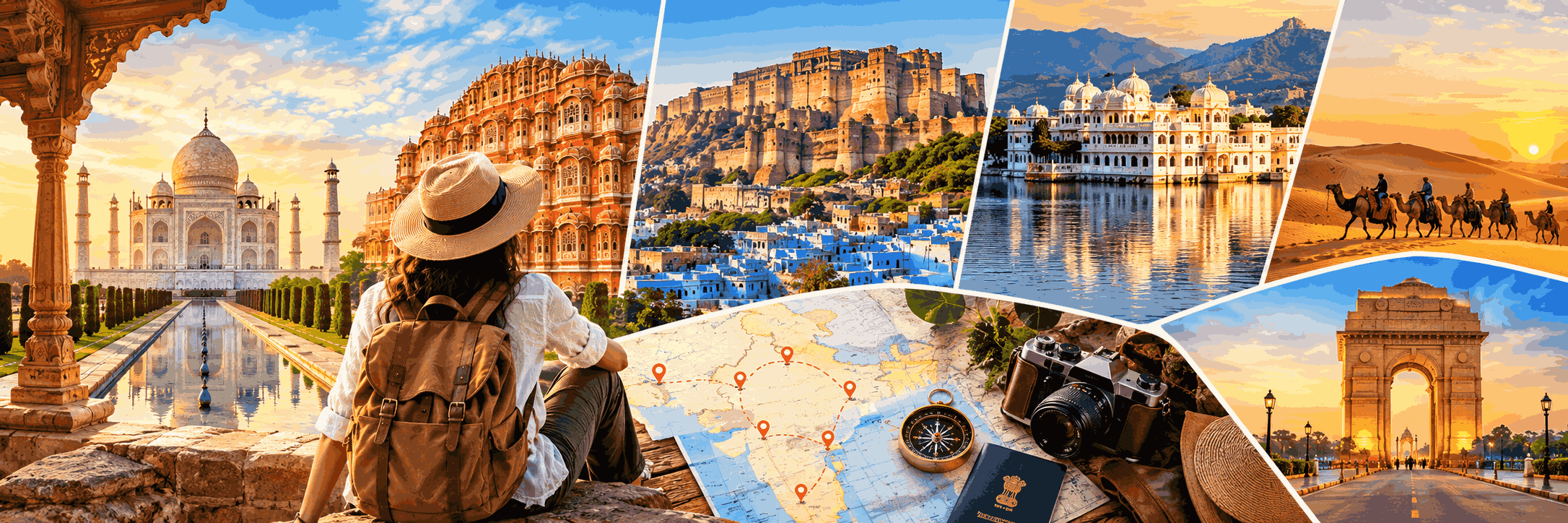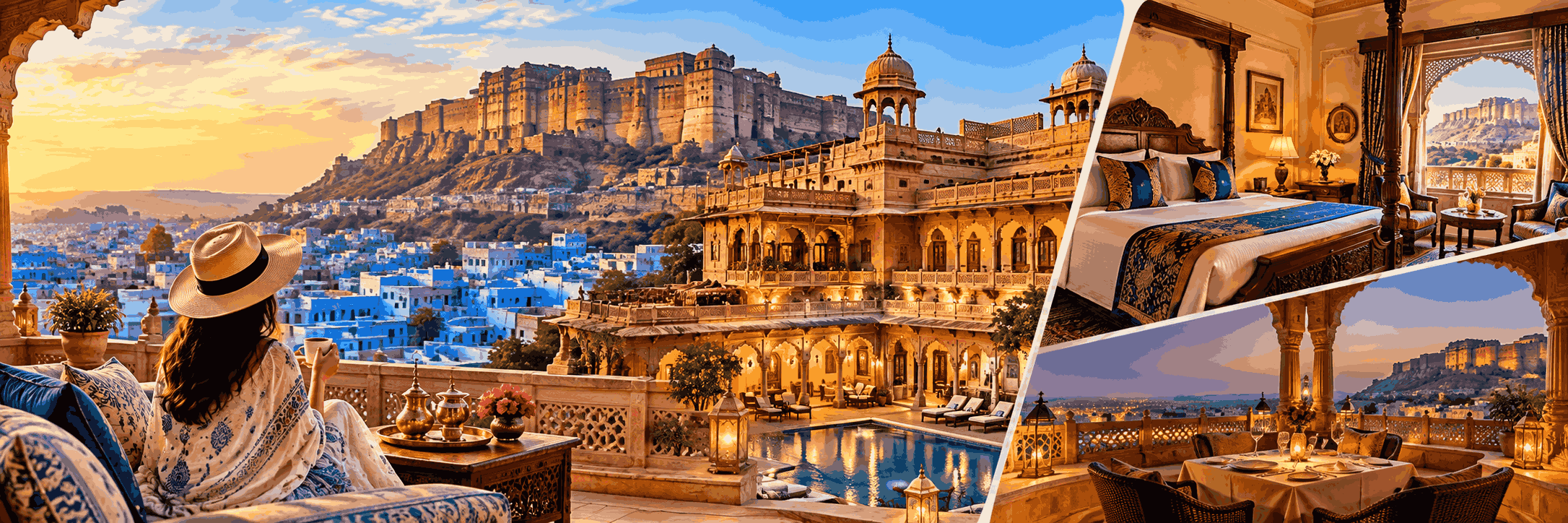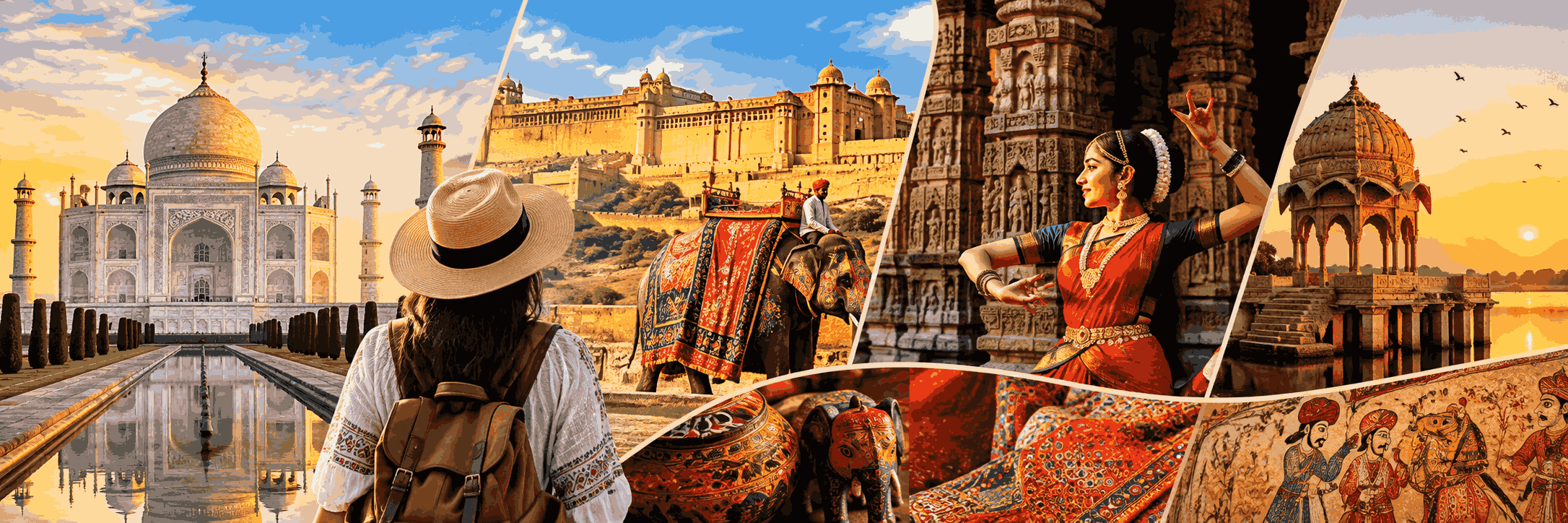
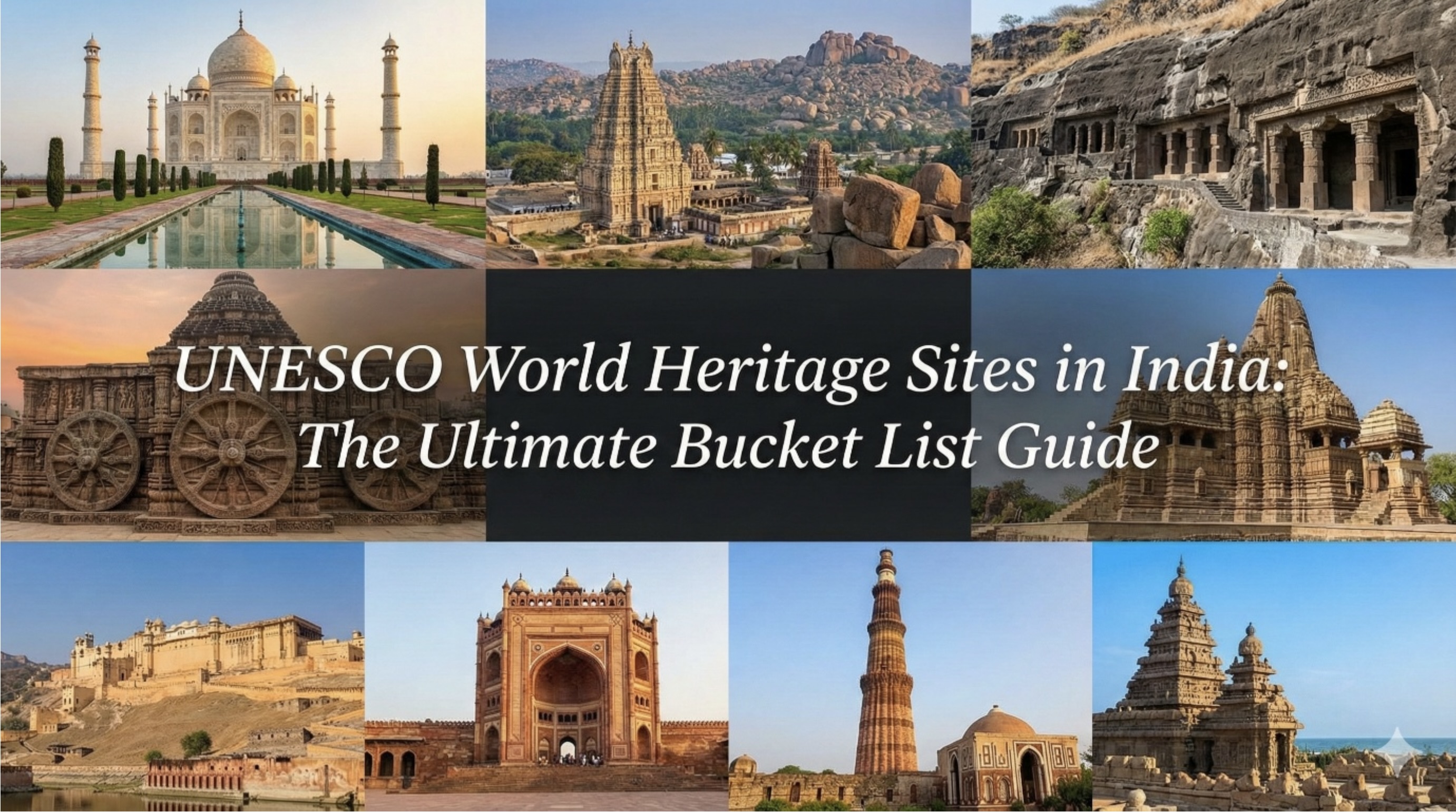
India is not just a country; it is a living, breathing timeline of human civilization. For thousands of years, empires have risen and fallen here, leaving behind an architectural legacy that is unmatched anywhere else on earth.
For the culturally curious traveler, navigating this vast history can be overwhelming. Where do you start when a country has tens of thousands of temples, forts, and ancient cities?
The answer lies in the "gold standard" of travel: UNESCO World Heritage status.
When a site receives this designation, it means it holds "outstanding universal value" for humanity. It is a guarantee that the location is historically significant, stunningly preserved, and worth the journey.
India currently boasts over 40 UNESCO sites, ranking it among the top countries globally for recognized heritage. For international travelers from Europe and the Americas, these sites represent the ultimate cultural bucket list.
If you are planning a trip to the subcontinent, here is our curated guide to the unmissable UNESCO World Heritage sites in India that define the country's soul.
1. The Taj Mahal, Agra (Uttar Pradesh)
The universal symbol of love and flawless symmetry.
No list of historical monuments in India can begin without the Taj Mahal. It is the most recognized building on the planet and the jewel of Mughal art in India. Built by Emperor Shah Jahan in memory of his favorite wife, Mumtaz Mahal, this white marble mausoleum is an architectural miracle.
Why it’s a bucket list item: Pictures do not do it justice. The sheer scale, the perfect symmetry, and the intricate pietra dura (inlay work of semi-precious stones) must be seen up close. The marble changes color depending on the light—pinkish at sunrise, milky white in the evening, and golden under moonlight.
Pro Tip: Arrive right at sunrise when the gates open to avoid the massive crowds and witness the most magical light.
2. The Group of Monuments at Hampi (Karnataka)
A surreal, boulder-strewn landscape of a lost empire.
If you want to feel like Indiana Jones, head to Hampi. This vast open-air museum was once Vijayanagara, the capital of one of India's greatest Hindu empires in the 14th century. Today, it is a hauntingly beautiful landscape where gargantuan boulders balance precariously around hundreds of temple ruins, royal pavilions, and ancient markets.
Why it’s a bucket list item: The contrast between the rugged, alien-looking geology and the delicate carvings of the temples is breathtaking. You can spend days exploring the ruins on a bicycle.
Don't Miss: The iconic stone chariot inside the Vittala Temple complex and the sunset view from Hemakuta Hill.
3. Ajanta and Ellora Caves (Maharashtra)
Ancient art carved directly into the heart of mountains.
Before soaring cathedrals were built in Europe, Indian monks were carving entire monasteries out of solid basalt rock cliffs. The Ajanta and Ellora caves are two distinct sites, located roughly 100 km apart, representing a feat of ancient engineering that seems impossible today.
Ajanta (2nd century BCE – 480 CE): Famous for exquisite Buddhist cave paintings that are among the oldest surviving frescoes in the world.
Ellora (600 CE – 1000 CE): Famous for sculpture and architecture, featuring Buddhist, Hindu, and Jain caves side-by-side.
Why it’s a bucket list item: The Kailasa Temple at Ellora (Cave 16) is the single largest monolithic structure on earth. It wasn't built up; it was carved down out of a mountain, removing 200,000 tonnes of rock. It is mind-boggling.
4. The Khajuraho Group of Monuments (Madhya Pradesh)
A stunning celebration of life, love, and spirituality.
Built during the Chandela dynasty between 950 and 1050 AD, the temples of Khajuraho are world-renowned for their Nagara-style architectural symbolism and their erotic sculptures.
While often sensationalized for the erotic carvings (which actually make up only about 10% of the art), these temples are masterpieces of intricate stone work. The sculptures depict every aspect of human life—royal courts, meditation, wrestling, dancing, and love—with incredible fluidity and grace.
Why it’s a bucket list item: They are arguably the finest surviving examples of medieval temple architecture in Northern India. The detail is so fine it looks like lace made of stone.
5. The Hill Forts of Rajasthan (Rajasthan)
The rugged glory of the Rajput warrior princes.
You cannot understand the history of India without understanding Rajasthan. UNESCO recognizes six majestic forts in this state as a serial heritage site: Chittorgarh, Kumbhalgarh, Sawai Madhopur (Ranthambore), Jhalawar, Jaipur (Amber), and Jaisalmer.
These aren't just castles; they are fortified cities built atop desert hills, utilizing the landscape for defense.
Why it’s a bucket list item:
Amber Fort (Jaipur): Famous for its opulent palace halls and mirrors.
Jaisalmer Fort: A "living fort" made of golden sandstone where thousands of people still reside inside the walls.
Kumbhalgarh: It boasts the second-longest continuous wall in the world after the Great Wall of China.
6. Fatehpur Sikri (Uttar Pradesh)
The magnificent ghost city of the Mughals.
Located just an hour west of Agra, Fatehpur Sikri is often visited alongside the Taj Mahal as part of the classic Golden Triangle route. Emperor Akbar built this stunning red sandstone city as his capital in the late 16th century, only to abandon it 15 years later due to water scarcity.
Why it’s a bucket list item: Because it was abandoned so quickly, it is perfectly frozen in time. It is one of the best-preserved examples of Mughal architecture in India, blending Persian, Hindu, and Jain design elements seamlessly.
7. Sun Temple, Konark (Odisha)
A colossal chariot for the Sun God.
On the eastern coast of India stands a temple designed in the shape of a gigantic chariot for the Sun God, Surya. Built in the 13th century, it features 24 enormous, intricately carved stone wheels and is pulled by seven stone horses.
Why it’s a bucket list item: The engineering is brilliant. The wheels of the temple actually function as giant sundials, which can still be used to calculate time accurately to the minute. It is a testament to the scientific and artistic genius of ancient India.
8. The Jantar Mantar, Jaipur (Rajasthan)
An astronomical playground of stone.
In the early 18th century, the scholarly King Sawai Jai Singh II built five astronomical observatories across North India. The one in Jaipur is the largest and best-preserved of these UNESCO World Heritage sites in India.
It looks like a collection of bizarre, giant abstract sculptures. In reality, these are precise astronomical instruments used to measure time, predict eclipses, and track stars with amazing accuracy.
Why it’s a bucket list item: It features the world's largest stone sundial, the Vrihat Samrat Yantra, which tells time to an accuracy of two seconds.
9. Qutub Minar and its Monuments, Delhi
The towering beginning of Islamic rule in India.
Standing in South Delhi, the Qutub Minar is the tallest brick minaret in the world, soaring 73 meters (240 feet) into the sky. Construction began in 1192 by Qutb-ud-din Aibak, marking the start of the Delhi Sultanate. The surrounding complex is full of other fascinating historical monuments, including ancient mosques and tombs.
Why it’s a bucket list item: The tower itself is a masterpiece, with each of its five stories showing a different architectural style. The complex also houses the famous 4th-century "Iron Pillar," which has famously never rusted despite centuries of exposure to the elements.
10. Mahabalipuram (Tamil Nadu)
Rock-cut wonders by the sea.
Down in South India, on the Coromandel Coast, lies the ancient port city of Mahabalipuram (Mamallapuram). Flourishing between the 7th and 8th centuries under the Pallava dynasty, this site is famous for its rock-cut temples and giant open-air rock reliefs.
Why it’s a bucket list item: The "Shore Temple," overlooking the Bay of Bengal, is incredibly romantic at sunset. The highlight, however, is "Arjuna's Penance," a massive, detailed carving on two huge boulders depicting scenes from Hindu mythology and everyday life.
Practical Tips for Visiting India’s Heritage Sites
Go Digital: Most major monuments now encourage online ticket bookings via the Archaeological Survey of India (ASI) website, which allows you to skip long queues.
Hire a Guide: To truly appreciate these sites, context is everything. A government-approved guide can unlock the stories hidden in the stone that you would otherwise miss.
Respect the Culture: Many of these sites are active places of worship. Dress modestly (cover shoulders and knees) and remove shoes when entering temple sanctums.
Ready to Explore History?
Reading about these UNESCO World Heritage sites in India is one thing; standing before them is transformative.
Whether you want to gaze at the Taj Mahal at sunrise or get lost in the ruins of Hampi, India Heritage Journey craft bespoke luxury itineraries that take you deep into the heart of India's history, comfortably and safely.