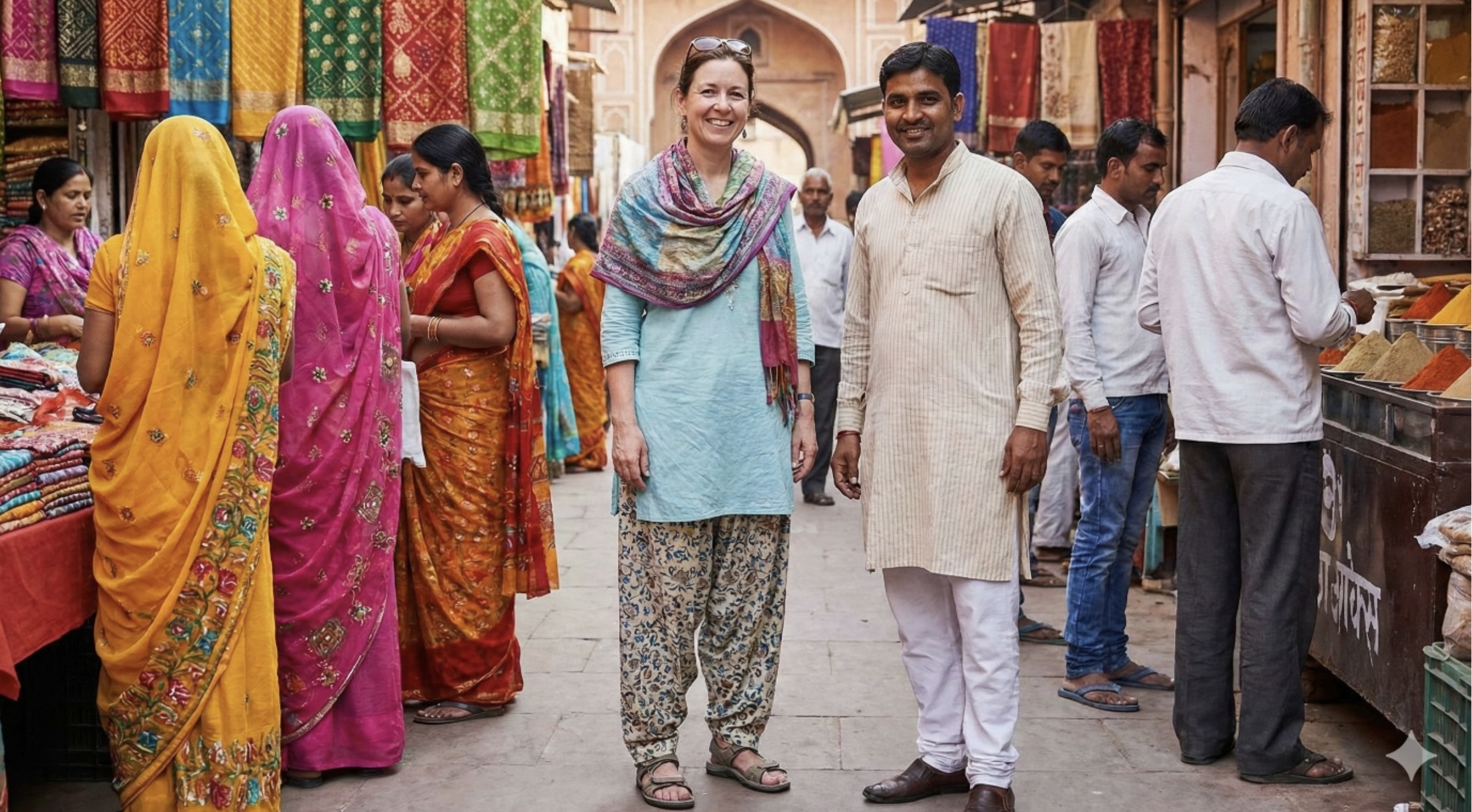
One of the most common questions we get from our international guests at India Heritage Journey isn’t about visas or vaccines—it is about clothes.
"Can I wear shorts?" "Do I need to cover my head everywhere?" "Will I offend someone if I wear a tank top?"
We understand the anxiety. India is a land of contrasts. It is a place where you will see women in trendy mini-skirts at a Mumbai nightclub, and women completely veiled in rural Rajasthan, all in the same trip.
For a first-time visitor, navigating this cultural landscape can feel tricky. But don't worry—the rules are simpler than you think.
This guide answers the burning question of what to wear in India as a female tourist (and for men too!), ensuring you stay cool, comfortable, and culturally respectful throughout your journey.
The Golden Rule: Modesty is Key
If you remember only one thing from this guide, let it be this: Cover your shoulders and your knees.
India is a conservative society at heart. While big cities like Delhi, Mumbai, and Bangalore are becoming very westernized, the majority of the country (especially the places you will visit on a heritage tour) values modesty.
By following the "Shoulders and Knees" rule, you will:
Gain Respect: Locals appreciate when foreigners try to respect their culture.
Avoid Unwanted Attention: Modest clothing helps you blend in rather than stand out as a "tourist."
Stay Protected: Loose, covering clothes actually protect you better from the harsh Indian sun and mosquitoes.
What to Wear in India: Female Tourist Guide
Ladies, you don't need to dress like a local Indian woman to fit in, but you should adapt your western wardrobe slightly. Here is exactly what works and what doesn't.
The "Yes" List (What to Pack)
Flowy Maxi Dresses & Skirts: These are perfect for India. They are airy, comfortable in the heat, and cover your legs. Just make sure they aren't transparent.
Loose Trousers / Harem Pants: Leave the tight skinny jeans at home (they are too hot!). Opt for linen trousers, palazzo pants, or "Aladdin" style pants which you can buy cheaply in local markets.
Cotton Tunics: In India, these are called Kurtis. They are long shirts that go down to your mid-thigh. They are the most common daily wear for Indian women and look great over leggings or jeans.
Leggings: A pair of black leggings is essential. You can wear them under a shorter dress or a long tunic.
The Scarf (Your Best Friend): Always carry a lightweight scarf (stole/dupatta) in your day bag. You can throw it over your shoulders if you are wearing a sleeveless top, or use it to cover your head when entering a temple.
The "No" List (What to Avoid)
Deep Cleavage: Showing cleavage is generally considered inappropriate in casual public settings in India.
Short Shorts / Mini Skirts: Save these for the beach in Goa. In cities like Agra or Jaipur, wearing short shorts will attract a lot of staring.
Sheer/See-Through Clothing: The sun is bright; check your clothes in daylight to ensure they aren't see-through.
Tight Yoga Clothes: While activewear is fine for the gym, walking around in a tight sports bra and leggings isn't common street wear here.
Cultural Etiquette: Temples and Religious Sites
India is a spiritual land, and a significant part of your India heritage tour will involve visiting temples, mosques, and gurdwaras. The dress code here is non-negotiable.
Cover Your Head: In Sikh Gurdwaras (like the Golden Temple) and many Mosques (like Jama Masjid), both men and women must cover their heads. Most places provide a cloth, but using your own personal scarf is more hygienic.
Remove Your Shoes: You must take off your shoes before entering any religious sanctum.
Pro Tip: Wear slip-on sandals or flip-flops on days you are sightseeing. Lacing and unlacing hiking boots 10 times a day gets exhausting!
Strict Modesty: No sleeveless tops or shorts. If you are wearing a tank top, wrap your scarf around you like a shawl.
What About Men?
The dress code for men is more relaxed, but the "cultural respect" rule still applies.
Trousers/Jeans: This is the standard daily wear for Indian men. Light cotton trousers or chinos are best for the heat.
Shorts: In big cities and tourist spots, knee-length shorts are fine. However, in temples and rural villages, men in shorts might look out of place or be denied entry.
Safe Bet: Convertible cargo pants that zip off into shorts are great for travel.
Shirts: T-shirts are perfectly fine everywhere.
The Ultimate India Travel Packing List (Checklist)
To make your packing easier, here is a quick checklist based on the cultural etiquette of India.
Clothing:
2-3 Loose Cotton Trousers / Linen Pants
2 Long Skirts or Maxi Dresses
3-4 T-shirts or modest tops (not low cut)
1 Lightweight Cardigan (AC in trains/planes can be freezing!)
2 Scarves/Pashminas (buy colorful ones when you arrive!)
Undergarments (Cotton is best for breathability)
Footwear:
1 Pair of sturdy walking sandals (like Tevas or Birkenstocks)
1 Pair of closed-toe shoes/sneakers (for dirty streets or flight days)
1 Pair of cheap flip-flops (for hotel showers or quick errands)
Essentials:
Sunglasses & Hat: The Indian sun is intense.
Hand Sanitizer & Wet Wipes: Indispensable for travel.
Modest Swimwear: If your hotel has a pool, a standard swimsuit is fine. If swimming in a river or public beach (non-tourist), wear a t-shirt over it.
Shopping in India: Buy Local!
One of our best tips for tourists is: Don't overpack.
India has a thriving textile industry. One of the joys of visiting places like Jaipur or Delhi is shopping for local clothes.
Buy a Kurta: Visit a store like FabIndia or Anokhi (popular brands) to buy high-quality, cotton Indian ethnic wear that is stylish and perfect for the climate.
Buy a Pashmina: In chilly months (Dec-Jan), a Kashmiri wool shawl is a beautiful accessory that keeps you warm.
Final Thoughts: Comfort vs. Culture
Following this dress code isn't about restricting yourself; it's about engaging with the culture respectfully. When you dress modestly, you signal to the locals that you respect their traditions. In return, you will find that people are warmer, more open, and more welcoming to you.
Are you ready to pack your bags?
Now that you know what to wear in India, it’s time to plan where to go! From the royal forts of Rajasthan to the spiritual ghats of Varanasi, India Heritage Journey offers bespoke tours designed for the culturally curious traveler.